Work minimalism means spending as little attention as possible on looking at your marketing, so more of it goes into improving it. That's the idea Metrcs is built around: every client and every channel in one place, the answer on the first screen, and tools that open over your work and close again in one tap. Flow Digital built it for our own clients first, and this is the thinking behind it.
The Monday tab pile
Every Monday at an agency starts the same way. Google Ads in one tab, Meta in another, then Google Analytics, Search Console, the email platform and Instagram. By the time you've logged in to everything and pieced together one client's week, you get to do it again for the next client.
The hours are the visible cost. The bigger one is attention. Each new tab is a small switch of focus, and a morning of switching leaves little for the part of the job that changes results: deciding what to do next.
What work minimalism means for us
We borrowed the term from people who apply minimalism to their homes and their phones. In a working day it comes down to three habits:
- Fewer places to look. One login for every client and every channel.
- Shorter visits. Open it, get the answer, close it.
- Decisions over browsing. The screen leads with what changed and what needs doing.
Every part of Metrcs is measured against those three.
One place for every client
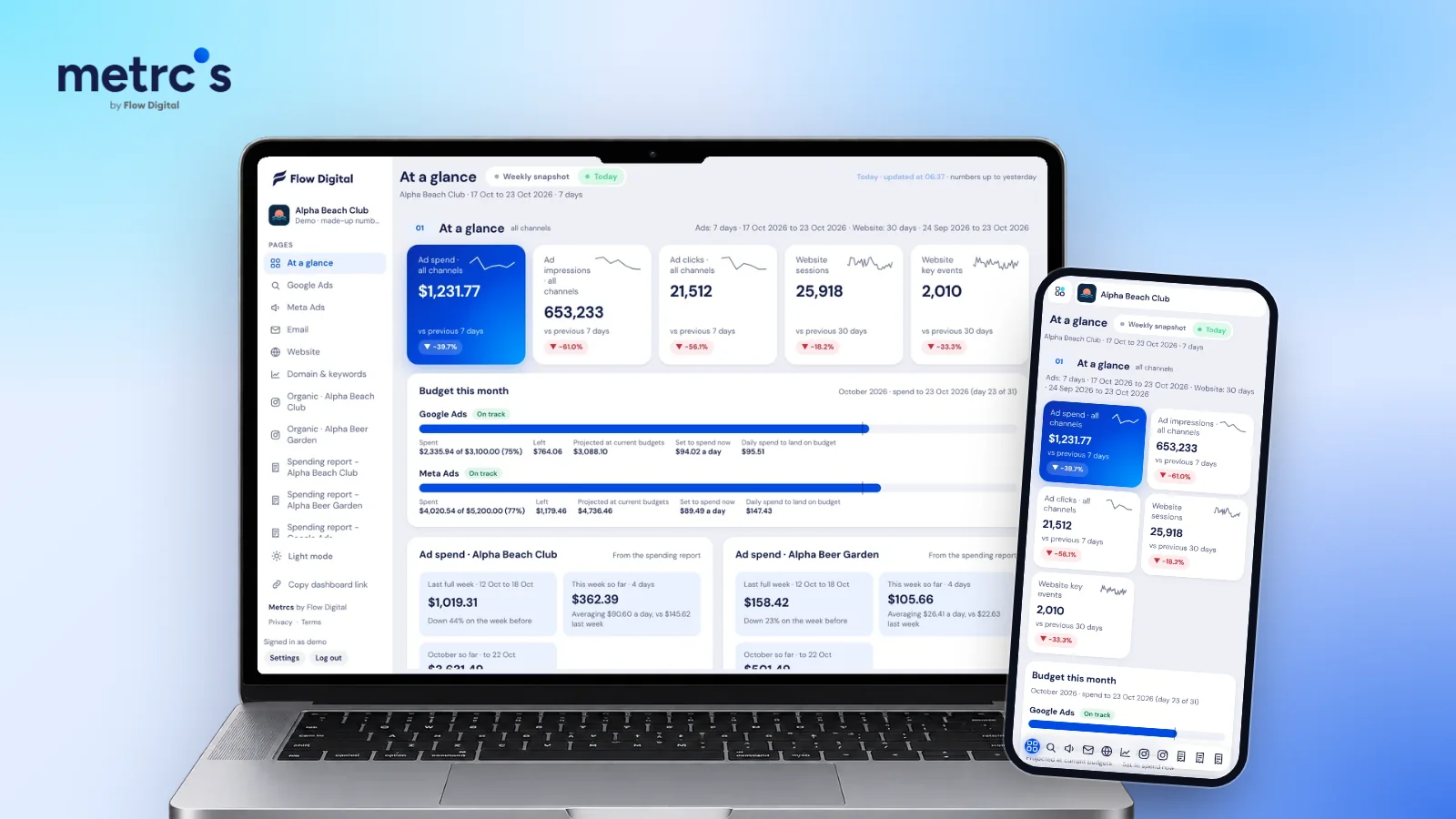
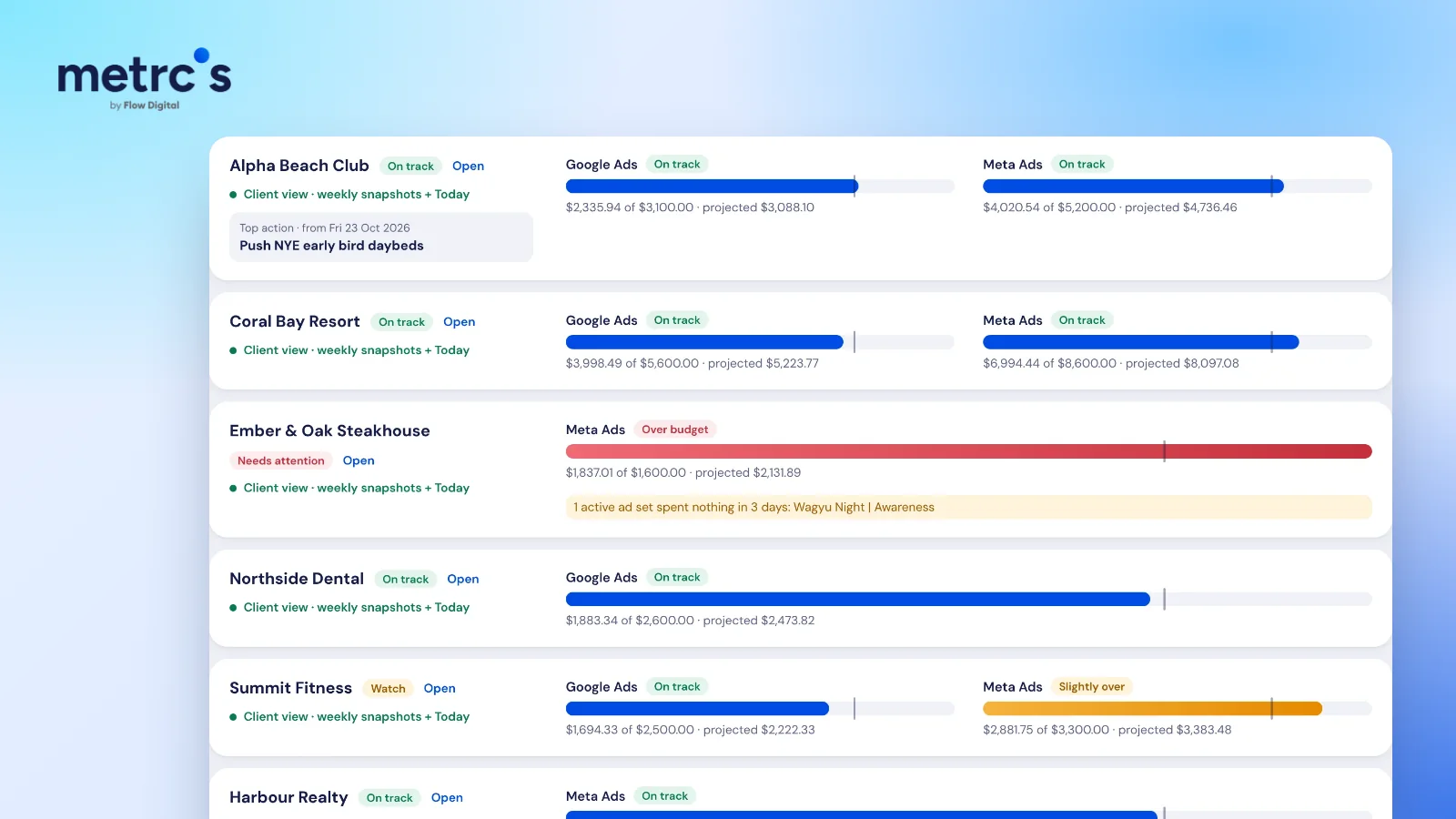
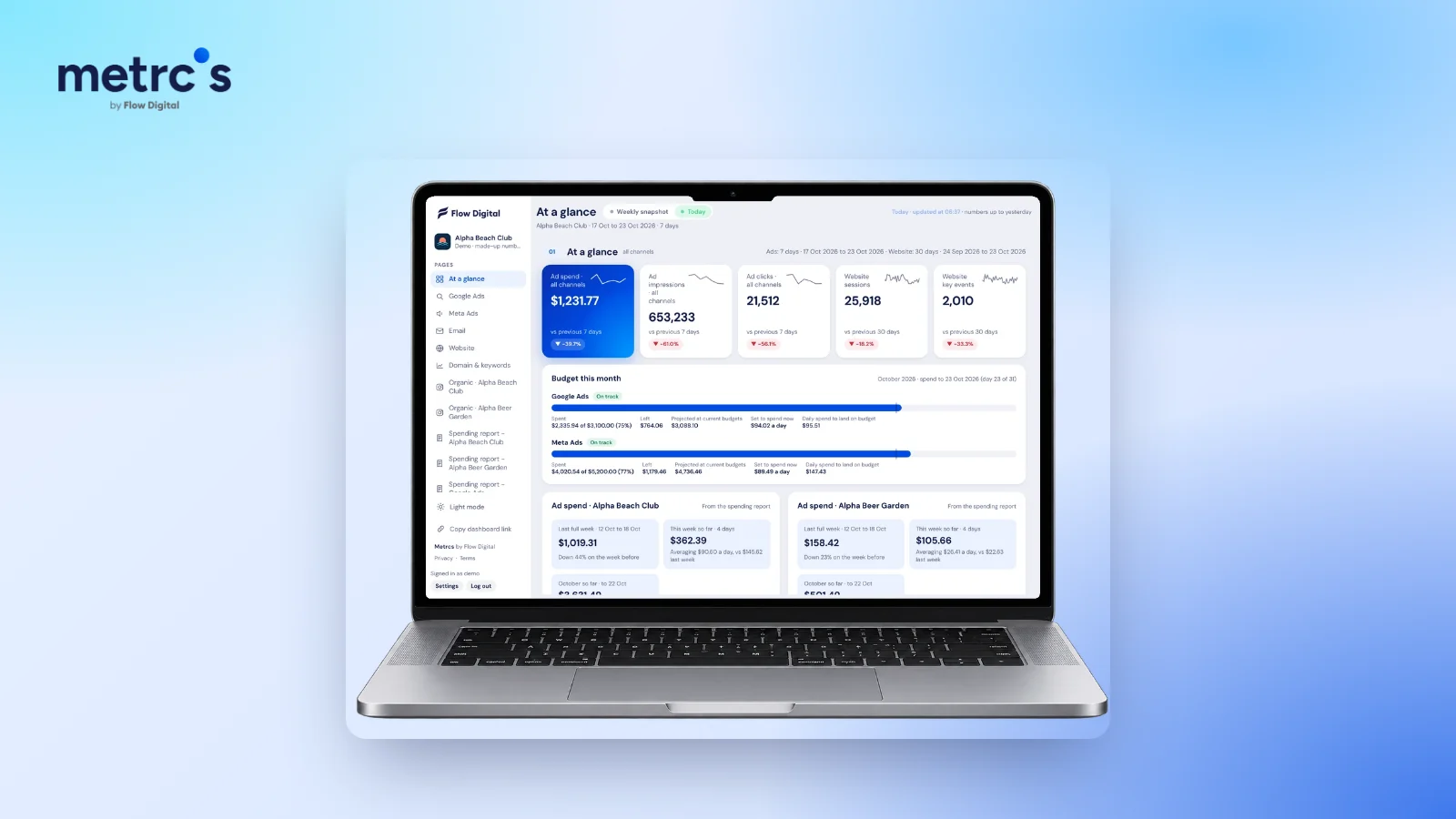
Metrcs brings Google Ads, Meta ads, Google Analytics, Search Console, Klaviyo and Instagram into one dashboard per client, and puts every client side by side in the agency view. There's one login, one layout and one set of dates, so nobody has to remember where a number lives or reconcile two platforms by hand before a meeting.
Clients get the same benefit. Each one has a private login that shows only their business, so they can check in when it suits them instead of waiting for a report. There's more on that in Metrcs for business owners.
The answer first
Most dashboards show everything they can measure and leave you to find the point. Metrcs starts from the question every client asks, "is it working?", and answers it before you scroll.
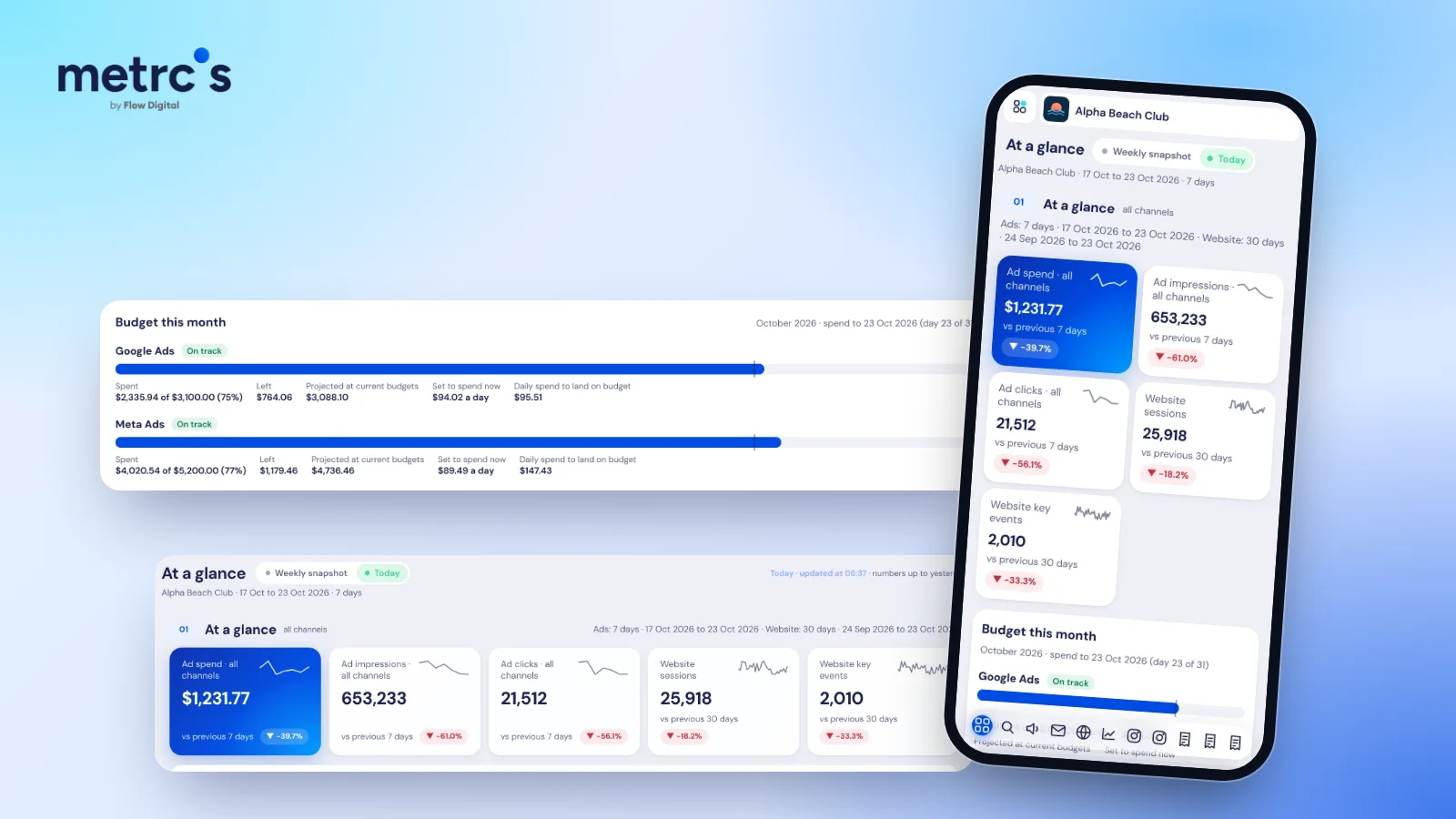
- At a glance puts each channel's headline numbers on one screen, compared with the period before.
- Status pills say whether a budget is on track, under-spending or worth watching.
- Delivery alerts flag a campaign that has stopped spending, the day it happens.
- Key points in the weekly snapshot sum up what moved and what to do next.
The detail is still there, one click further down, for the days you want it.
In, out, back to work
The newest part of Metrcs is the overlay. The calendar, settings and the guide open over the dashboard and close with one tap or the Esc key. On a computer the menu stays in view beside them, and on a phone they fill the screen. When you close one, you're back exactly where you were.
The calendar shows the idea best. It puts every calendar you connect into one view, and your next meeting sits under your name in the menu, with a Join button 15 minutes before it starts. You see what's next without opening another app, then carry on with the work in front of you.
What we leave out on purpose
A lot of minimalism is about what's missing:
- No notification stream. Metrcs flags problems on the page and leaves your phone alone.
- No vanity charts. If a number doesn't help someone make a decision, it doesn't earn a place on the first screen.
- Nothing that edits your accounts. Metrcs only reads numbers. It can't change a campaign, a budget or a post, so checking it is never a risk.
- No report building. Numbers refresh every morning and weekly snapshots save themselves, so nobody spends Monday copying figures into slides. If you still send a written update, here's how to write a weekly client report clients actually read.
The test for every new feature
Work minimalism also decides what we build. Each new tool has to pass one test: can you open it, get your answer and close it in a few seconds? If it can't, it isn't ready yet. The tools we're adding next are being built to the same rule.
Fewer tabs, clearer numbers
Metrcs won't make marketing easy. The work is still the work. What it can do is take the looking-up out of your day, so the attention you have goes on decisions. Check in, see what matters, and get back to the work that moves the numbers.
The short version lives on our philosophy page.
Ardjuna founded Flow Digital, a marketing agency in Bali that runs ads, websites, email and content for its clients. He built Metrcs so the agency could see every client’s marketing on one page and spend less time on reports.